
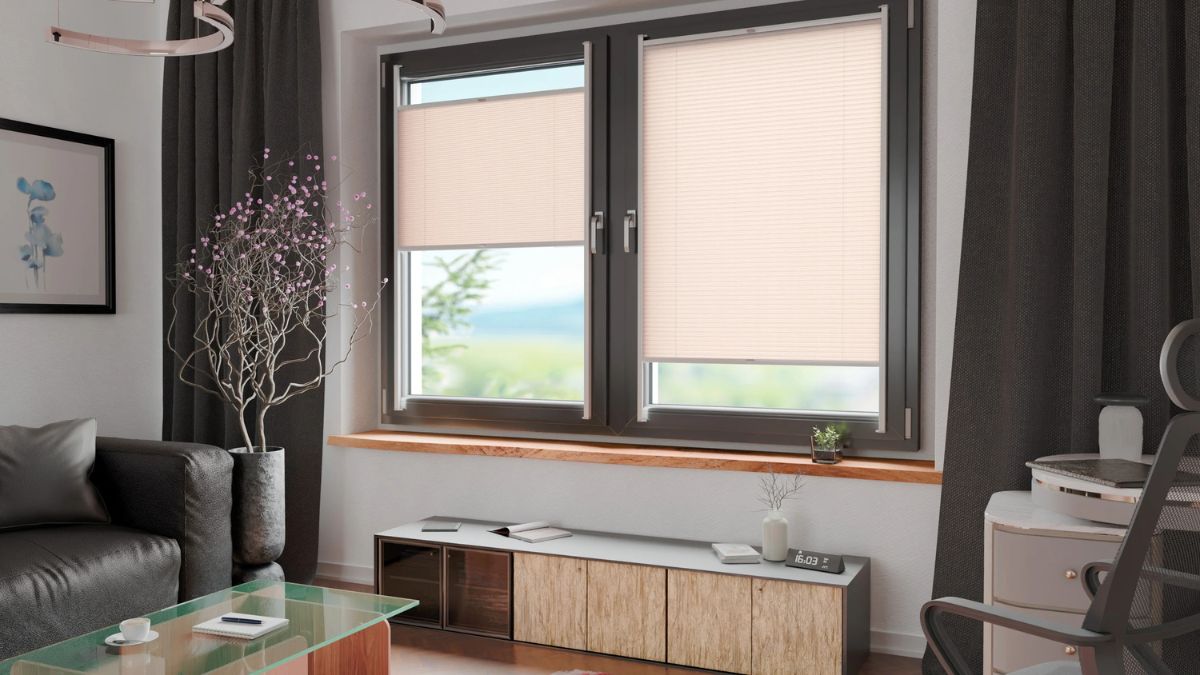
Windows shape how a room feels. They influence brightness, heat retention, and privacy more than most décor elements combined.
Standard pleated blinds often struggle with stability, especially on roof or fixed glazing. Fabric sway, visible cords, and uneven alignment can reduce both performance and appearance. Honeycomb pleated blinds with integrated rails address those limitations through structural guidance and thermal design.
This review outlines how the system works, where it performs best, and what to consider before ordering.
Design & Construction
These blinds focus on structure as much as appearance. The combination of internal cord guidance and aluminum rails changes how pleated systems behave in daily use.
Honeycomb Fabric Structure
The cellular fabric features internal cord guidance rather than visible perforations.
- No exposed cord holes across the fabric surface
- Clean, uninterrupted visual finish
- Improved long-term fabric integrity
The honeycomb construction forms air chambers within the material. These pockets help regulate indoor temperature while maintaining a consistent pleated profile.
Integrated Aluminum Rail System
Side rails are not optional accessories. They are built into the system.
This integration provides:
- Stable vertical movement
- Reduced fabric sway
- Secure alignment on roof or fixed windows
- A controlled, minimalist appearance
Compared to free-hanging pleated blinds, the rail-guided design feels more precise and engineered for demanding window positions.
Materials & Light Diffusion
Material selection affects both insulation and visual comfort. Here, the balance leans toward durability and filtered daylight.
Fabric Composition
The blinds use 100% polyester honeycomb fabric with a nonwoven spunbond surface.
This pairing supports:
- Structural resilience
- UV exposure reduction
- Glare moderation
- Long-term dimensional stability
Polyester resists stretching and sagging, which is especially important for angled or overhead installations.
Light Performance
The cellular weave softens incoming daylight instead of blocking it entirely.
Rooms remain bright but controlled. Harsh glare is reduced, and light spreads more evenly across walls and floors. Depending on the fabric selected, blackout-level coverage may not be the goal. These blinds focus more on diffusion and moderation than full darkness.
Mounting & Installation
Installation plays a major role in user experience. This system avoids invasive mounting methods.
No-Drill Adhesive Rail Mount
The rails attach directly to the window frame using an adhesive system.
Benefits include:
- No screws or drilling
- Minimal tools required
- Cleaner installation process
- Suitable for rental or sensitive frames
Proper surface preparation is essential. Frames must be clean, dry, and smooth to ensure strong adhesion over time.
Window Compatibility
This configuration works particularly well for:
- Fixed glazing
- Roof windows
- Windows with limited clearance
- Tilt or angled installations
Traditional brackets can interfere with opening mechanisms. Rail-mounted systems avoid that issue.
Customization & Dimensions
Fit determines performance. These blinds are made to measure rather than supplied in preset sizes.
Made-to-Measure Precision
Width and height are specified in millimeters.
This allows:
- Accurate edge-to-edge coverage
- Reduced light gaps
- Clean frame integration
- Improved insulation consistency
Precise sizing is especially important for roof windows where even small gaps become noticeable.
Color & Finish Options
The system offers flexibility in both rail and fabric selection.
Rail finishes:
- White
- Anodized aluminum
- Brown
- Anthracite
- Wood-look alternatives
Fabric colors commonly include white, cream, sand, gray, and coordinating neutrals suited to modern interiors.
The range supports both minimalist and warmer design schemes without overpowering the space.
Performance & Everyday Benefits
Function defines long-term value. These blinds prioritize stability, insulation, and controlled lighting.
Thermal Contribution
The honeycomb air chambers trap heat in winter and help reduce heat gain in warmer months.
While not a replacement for structural insulation, they provide measurable improvement in temperature moderation near window areas.
Structural Stability
Rail guidance eliminates the pendulum effect seen in free-hanging pleats.
The blind remains aligned throughout the day, even when installed on angled surfaces.
Clean Visual Finish
Concealed cords and flush rails create a refined look.
There are no visible mechanical interruptions across the fabric surface. The result feels intentional rather than improvised.
Planning Considerations
No product is universal. A few practical factors should be reviewed before ordering.
- Adhesive performance depends on proper frame preparation
- Custom sizing requires careful measurement
- Pricing varies by dimensions and finish selection
- Light-filtering fabrics may not provide full blackout
Taking accurate measurements is critical. Rechecking width and height before placing an order prevents alignment issues later.
Where These Blinds Make the Most Sense
Honeycomb pleated blinds with rails perform best where traditional systems struggle.
They are particularly effective for:
- Roof windows
- Fixed glazing panels
- High or angled installations
- Spaces needing improved insulation without heavy treatments
The rail-guided structure separates them from standard pleated blinds. Stability improves. Appearance sharpens. Thermal performance increases.
For homeowners prioritizing clean lines and practical function, this system offers a structured solution rather than a decorative add-on.