
If you regularly straighten your hair, you already understand the trade-off: smooth, polished strands often come at the cost of dryness, split ends, and cumulative heat damage.
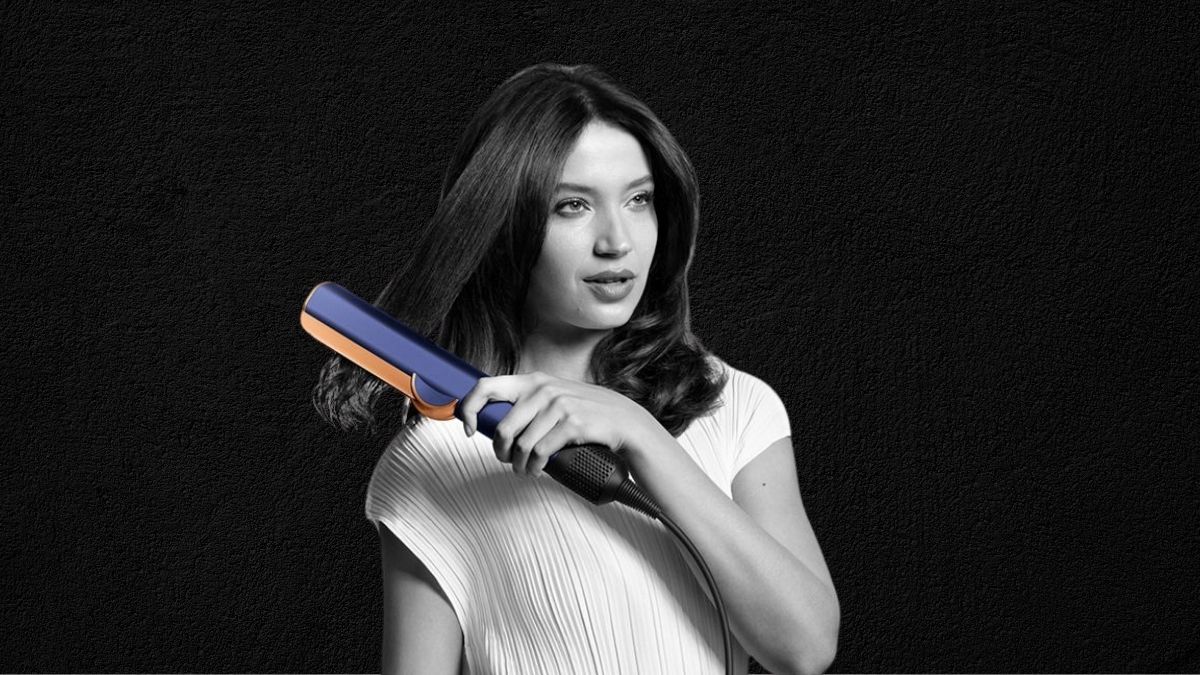
Traditional flat irons can reach extremely high temperatures, which may weaken the hair shaft over time. The Dyson Airstrait promises a different approach. Instead of clamping your hair between hot plates, you use precisely controlled airflow to dry and straighten simultaneously. That shift in method is what makes this tool stand out in a crowded premium styling market.
With thousands of high ratings and a $499 luxury price tag, the real question is whether it truly earns its place in your routine.
How the Dyson Airstrait Technology Works
At the core of the Airstrait is Dyson’s Hyperdymium™ motor, engineered to spin up to 106,000 RPM. That power generates focused airflow directed evenly across your hair strands. Rather than compressing hair between heated plates, the device uses angled air to create natural tension and alignment.
The result is straightened hair with significantly less direct heat exposure. Intelligent heat sensors monitor temperature multiple times per second, helping maintain consistent conditions and prevent overheating.
Compared to traditional flat irons that can exceed 400°F, the Airstrait operates at lower, controlled temperatures while still delivering sleek results. From a design standpoint, this isn’t just a feature upgrade—it’s a structural rethinking of how straightening works.
Design and Build Quality
When you hold the Dyson Airstrait, it feels solid and engineered with purpose. It’s heavier than a traditional flat iron due to the internal motor system, but that weight reflects durability and advanced mechanics.
You’ll notice:
- A built-in LCD screen displaying temperature and mode
- Separate wet and dry styling options
- Premium Prussian Blue/Copper finish
- Heat-resistant materials throughout
While slightly bulkier than standard straighteners, the ergonomic design makes it manageable after a few uses. The hinge tension feels controlled, and the device glides smoothly without snagging strands.
Styling Modes and Versatility
The Airstrait is designed to adapt to your hair type and styling needs. Instead of a one-temperature-fits-all approach, you can choose specific heat levels depending on thickness and condition.
Wet-to-Dry Mode
- 175°F (fine or fragile hair)
- 230°F (normal hair)
- 285°F (thick or coarse hair)
Dry Mode
- 250°F (standard styling)
- 285°F (resistant hair)
- Boost mode for extra smoothing
Cool Mode
- Cold air to set your finished look
This flexibility allows you to minimize unnecessary heat exposure while still achieving sleek results tailored to your texture.
Performance Across Hair Types
Your experience with the Airstrait will depend largely on your hair texture and density. It performs exceptionally well on straight to wavy hair (Type 1–2C), and it handles frizz-prone or color-treated hair with noticeable gentleness.
In real-world use, most users report:
- Reduced frizz compared to traditional blow-drying
- Improved shine retention
- Softer, more natural movement
- Longer-lasting smoothness
If you have tightly coiled or very curly hair, you may need additional smoothing tools. The Airstrait focuses exclusively on straight styles and does not replace curling irons or multi-stylers.
For best results, you should towel-dry your hair to about 70–80% before starting. Sectioning your hair evenly also improves consistency.
Time Efficiency and Ease of Use
One of the biggest advantages is combining two steps—drying and straightening—into one streamlined process.
Average styling time:
- Short hair: 10–15 minutes
- Medium to long hair: 15–25 minutes
- Thick hair: up to 30 minutes
You eliminate the need for a separate blow-dry session, which can significantly shorten your routine.
There is, however, a learning curve. The airflow technique feels different from clamping plates. After a few sessions, most users find the motion intuitive, but initial attempts may take slightly longer. Arm fatigue can occur due to the weight, especially if you have very long hair.
Pros and Cons at a Glance
Before you make a final decision, it helps to quickly weigh the core strengths and trade-offs. This summary gives you a clear snapshot of what the Dyson Airstrait does exceptionally well—especially if hair health and efficiency are priorities in your routine.
Pros:
- Less direct heat damage
- Combines drying and straightening
- Intelligent temperature regulation
- Smooth, glossy finish
- High-end build quality
Cons:
- Premium $499 price point
- Heavier than traditional straighteners
- Not designed for curls or waves
- Requires practice for optimal technique
Is the Investment Worth It
From one perspective, $499 is undeniably expensive. You could purchase separate high-end tools for less upfront cost.
From another perspective, you’re investing in:
- Long-term hair health
- Fewer styling steps
- Reduced cumulative heat damage
- Potential savings on repair treatments
- Premium engineering and durability
If you straighten your hair several times a week, the long-term value becomes more compelling. If you style occasionally, the cost may outweigh the benefits.
This tool isn’t designed for everyone. It’s built for users who prioritize efficiency, hair health, and advanced technology.
Bringing It All Together
If sleek, straight hair is your go-to style and you value innovation backed by strong engineering, the Dyson Airstrait delivers measurable advantages. It genuinely reduces direct heat exposure while simplifying your routine.
It won’t replace curling tools, and it won’t eliminate all styling effort. But for healthier straightening with fewer steps, it stands out in the luxury hair tool market.
If you’re exploring high-end beauty tools or searching for thoughtful premium gifts, you can browse DysonES to discover more styling innovations that fit your needs.