
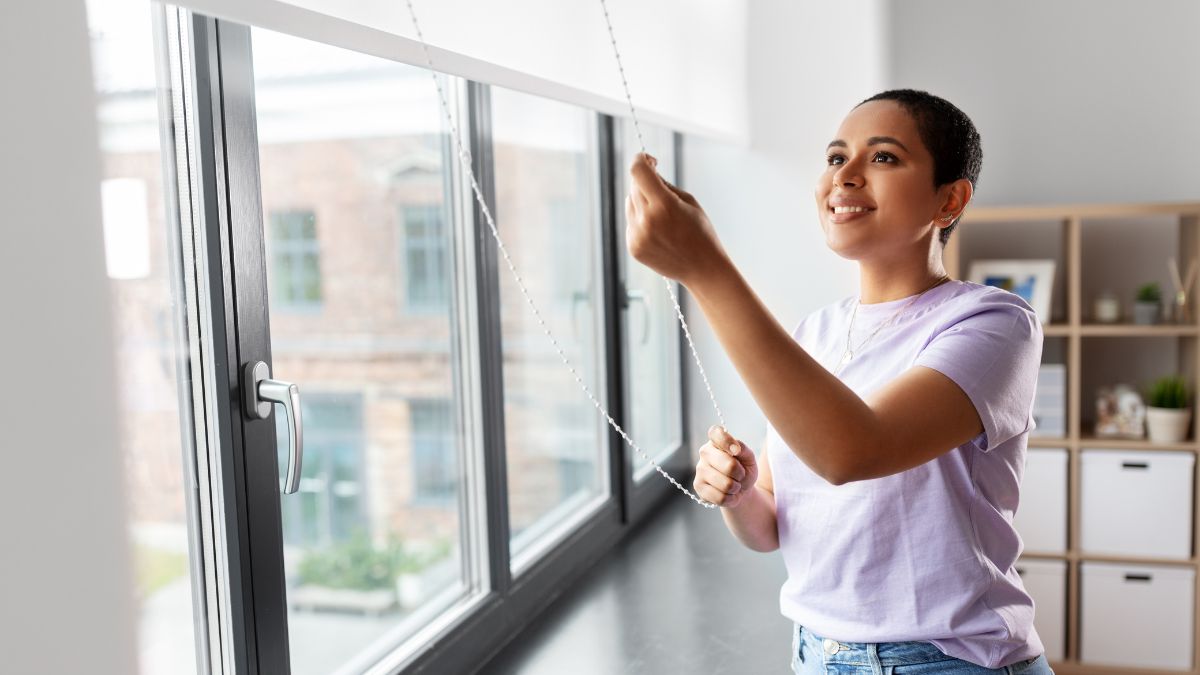
Ordering roller blinds sounds simple. Measuring them correctly is where most problems begin.
A few millimeters can decide whether your blinds glide smoothly or scrape against the frame. Whether you choose an inside recess fit, an outside wall mount, or a cassette system, precision matters. This guide explains exactly how to measure step by step and what to avoid.
Tools You’ll Need for Accurate Results
Before measuring, prepare the right tools. Accuracy depends on it.
- Steel tape measure (not fabric)
- Pencil and notepad or phone notes
- Step ladder if measuring above frame height
- Level (optional but recommended)
A steel tape measure provides consistent readings. Fabric tapes stretch and distort numbers over time.
Measure in millimeters whenever possible. This reduces rounding errors, especially for custom orders.
Inside Mount (Recess Fit): Clean and Integrated Look
An inside mount positions the blind within the window recess. The result looks minimal and built-in.
Start with the width:
- Measure at the top, middle, and bottom of the recess.
- Record the narrowest measurement.
Windows are rarely perfectly square. Using the smallest width ensures the blind fits without friction.
Next, measure the height:
- Measure left, center, and right.
- Record the shortest measurement.
Most manufacturers slightly reduce the fabric width from the ordered width. This allows smooth movement inside the recess.
Before ordering, confirm the recess depth is sufficient for brackets or a cassette system. Insufficient depth can prevent proper installation.
Outside Mount (Wall or Frame Fit): Better Light Control
Outside mounting covers the frame and extends onto the wall or trim. This option reduces light gaps.
Measure the total width you want to cover. Then:
- Add 4–6 cm (1.5–3 inches) overlap on each side.
This overlap improves light blocking and privacy.
For height:
- Measure from your top mounting point down to the desired bottom.
- This is usually the sill or slightly below.
Make sure the mounting surface is stable and level. Uneven surfaces affect operation and appearance.
Outside mounts are often recommended when recess depth is limited or when maximum blackout performance is required.
Cassette Roller Blinds (Kassettenrollos): Dual Width Measurements
Cassette systems include side rails and a top housing. They require more attention.
Two width dimensions matter:
- Width A: Fabric and bottom rail width.
- Width B: Total system width including side rails.
Manufacturers usually deduct about 3 mm from Width A to allow smooth operation.
Keep Width B within 3–5 cm of Width A. Excessive difference can affect side rail function.
For niche mounting, ordering approximately 4 cm wider than the glass area improves coverage and strengthens rail adhesion.
Always verify whether the listed width refers to total width or fabric width only. This prevents one of the most common ordering errors.
Measuring Height Correctly
Height always runs from the top mounting point to the final drop point.
If using a cassette system:
- Include the cassette height in your total calculation.
Check for obstacles:
- Window handles
- Ventilation grilles
- Security sensors
Ensure the blind clears these elements during operation.
Clearance planning avoids interference and uneven hanging.
Measuring XL or Large Windows
Large windows increase the risk of light leakage.
To improve coverage:
Check bracket projections. Some brackets extend beyond fabric width, which affects final coverage.
Also confirm that your wall or frame can support the blind’s weight. Larger blinds exert more stress on mounting points.
Reinforcement may be necessary for heavier systems.
Best Practices for Reliable Measurements
Small habits prevent expensive returns.
- Measure each dimension two to three times.
- Use millimeters for precision.
- Confirm whether ordered width means system width or fabric width.
- Inspect frames for irregularities.
- Note all obstacles before ordering.
If a frame is out of square, always use the smallest measurement for inside mounts.
Precision reduces installation adjustments later.
Common Measurement Mistakes
Avoid these frequent errors:
- Taking only one measurement.
- Forgetting overlap for outside mounts.
- Ignoring hardware depth requirements.
- Confusing fabric width with total system width.
- Not accounting for obstructions.
These issues often lead to blinds that fit poorly or allow unwanted light gaps.
Getting It Right from the Start
Correct measurement ensures smooth installation and long-term performance. It also improves light control and overall appearance.
Inside mounts require the narrowest width and shortest height. Outside mounts require proper overlap. Cassette systems require clarity between fabric width and total system width.
Measure carefully. Double-check every figure. Precision at this stage saves time, cost, and frustration later.